
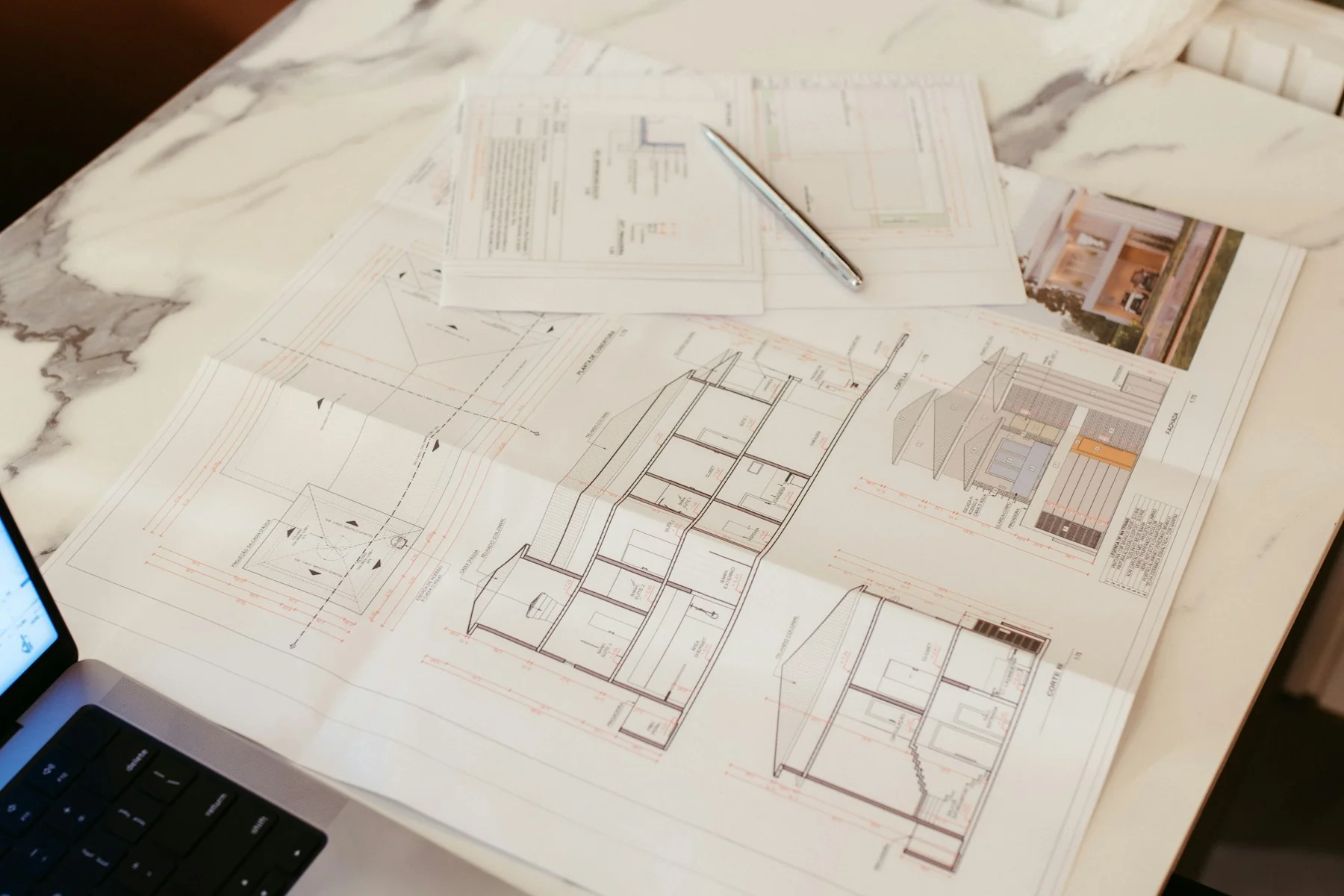
Suppose you email a floor plan, six room photos, and a smartphone compass screenshot, noting that you have slept poorly since moving in. These materials provide a helpful starting point, but they do not yet establish the building’s true orientation, plan accuracy, or whether sleep issues stem from environmental noise, ventilation, or spatial layout. A remote consultation can still be thorough, as long as the practitioner is clear about the method, the information used, and what cannot be verified from a distance.
In this consultation, the objective is not to distribute decorative cures across a floor plan. The work consists of establishing the building’s construction period and directional orientation, generating a nine-palace chart, and analysing how traditional energy distributions interact with daily room use.
Define specific questions rather than general inquiries
Asking “Is this home lucky?” is too broad to generate actionable guidance. A well-defined inquiry asks: “Between the two available bedrooms, which is better suited for restorative sleep?” or “How should we organise the home office, primary bedroom, and living area within our existing layout?” Clearly state who occupies each space, what practical issues have arisen, what adjustments you have already attempted, and which physical walls cannot be moved.
Standard physical factors must be evaluated first. Street noise, hallway lighting, poor ventilation, room temperature, mould, an uncomfortable mattress, or late-night screen habits can disrupt sleep without any reference to Feng Shui. Similarly, structural safety, electrical wiring, and medical concerns belong strictly to licensed professionals. A traditional review complements these practical assessments rather than replacing them.
The technical foundation of Xuan Kong Flying Star
Xuan Kong Flying Star relies on two primary data points: the building’s construction period and its precisely measured sitting and facing orientation. Together, these determine the nine-palace natal chart. A practitioner examines the interaction of base period stars, mountain stars (traditionally linked to health and relationships), and facing stars (associated with activity and prosperity) across functional living zones.
Reliable period and orientation data are needed to build the chart. Once those inputs are verified, the practitioner can interpret the palace and star relationships and turn them into room-specific, workable advice. If the directional measurement is inaccurate, chart-dependent conclusions may be unreliable. Practical observations that do not depend on that bearing should be identified separately.
The building’s “period” does not always match the year shown on a real estate listing. Construction completion, initial occupancy, and major structural renovations must be distinguished under the chosen lineage rules. Lineages may also differ on how facing orientation is determined in modern apartment complexes and when replacement chart rules apply. A rigorous report discloses its methodology rather than presenting debatable technical choices as undisputed facts.
Measuring directional orientation accurately
A single compass reading taken next to an elevator shaft, reinforced steel door, parked car, or electrical panel can be distorted by magnetic interference. For a remote review, follow a clear measurement protocol: record the device used, document the exact physical locations where readings were taken, remove magnetic phone cases, and capture multiple readings from stable positions away from immediate metal structures.
Practitioners must also clearly distinguish between the overall building facing and the door orientation of an individual apartment unit. The report should state which orientation is used and why. If repeated measurements conflict or if exterior architectural facing cannot be verified remotely, the consultation should mark its findings as conditional or pause that section of the analysis until accurate data is obtained.
Preparing an effective evidence submission
To support a rigorous remote review, prepare a clear evidence package:
- A scaled, readable floor plan showing the main entrance, windows, balconies, circulation paths, and key rooms;
- Clear directional markings based on documented measurement protocols;
- Current interior photographs showing entryways, room layouts, and window views from multiple angles;
- Exterior notes describing immediate surroundings, such as busy roads, nearby construction, steep slopes, or adjacent buildings.
External environmental observations provide essential context, but they should never be blended into Xuan Kong chart rules without explicit labelling. A sound report keeps the core Flying Star analysis distinct from general environmental observations.
Consider a hypothetical example: an initial directional estimate is found to be inaccurate. A remeasurement following documented protocols corrects the building’s sitting/facing orientation by twelve degrees. Under the chosen lineage rules, the corrected bearing crosses a Twenty-Four Mountains boundary. This may change the chart configuration used for the property and requires the home-office analysis to be recalculated. Merely rotating a drawing on a screen does not alter the building’s true bearing or chart; the change occurs because the measured physical orientation was corrected.
What a rigorous remote report delivers
A dependable consultation document records every technical input, discloses its confidence level, and maps chart sectors to actual household functions. It explains its recommendations through a clear structure: chart dynamic combined with room function, observed physical condition, and practical household constraints.
Recommendations follow a clear order of priority:
- High-priority spatial assignments, such as choosing which room serves as the main bedroom;
- Medium-priority layout adjustments, such as repositioning a bed or desk within a room;
- Low-priority, reversible experiments, such as minor lighting or partition adjustments.
Remedies are tied to specific chart dynamics rather than generic retail shopping lists; the wider tradition does use material and element remedies in some schools, but in this consultation they belong to the chart reading, not a shop shelf. You should never be pressured to purchase specialist decorative objects to benefit from the analysis.
Remote consulting carries inherent physical limits. An unverified floor plan, undocumented renovation history, or conflicting compass readings naturally constrain the scope of conclusions. Xuan Kong Flying Star is a traditional interpretive discipline, not a scientific guarantee of financial or health outcomes. Its value lies in offering structured, transparent spatial analysis to help you make informed living choices.
If you have a clear floor plan, documented orientation measurements, and defined living priorities, review the Remote Home Feng Shui Review to see how a structured assessment works.
Filed under Feng Shui. Back to all articles.